

Twenty years on - A personal reflection on Visit County Durham
Ivor Stolliday
I was the Chairman of Visit County Durham (VCD) from September 2009 until the end of June 2023. Fourteen years of change, tumult, achievement, some hard work and quite a lot of fun. Fourteen years was, for sure, longer than is recommended for a chairmanship, but the truth is I lost count of the years and so, it seems, did my colleagues. There was much to do and we just carried on.
This year, 2026, marks the twentieth anniversary of Visit County Durham, and I shall not even try to write a history; give a list of achievements and events; or describe the milestones of those twenty years. All of that is available in a chronology elsewhere. My task is both simpler and harder. I shall try to use Kipling’s ‘Six honest serving men’, and to talk about ‘What and Why and When, and How and Where and Who’.
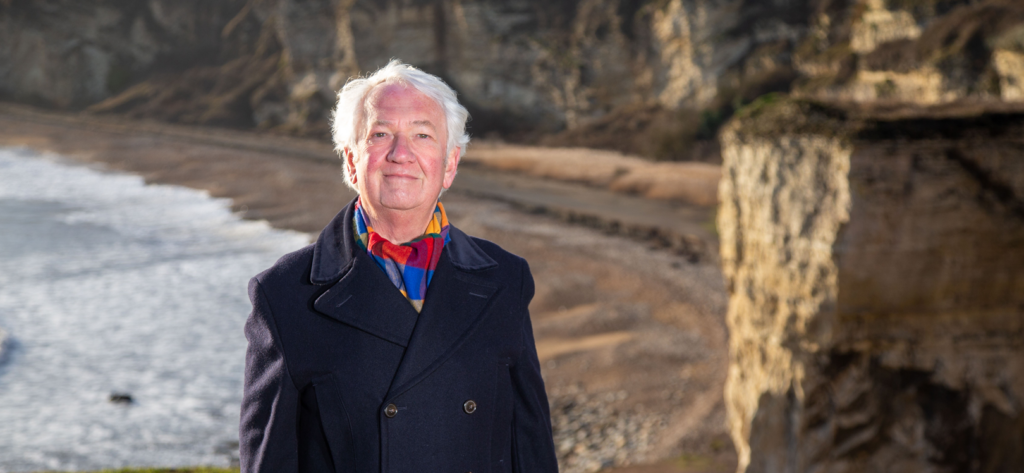
My time with VCD began conventionally enough, by seeing a job advertisement, applying and having an interview. The former, and first, Chairman, Chris Davey, was moving on and the post was becoming vacant. However, I had three significant reservations as I drove to Durham for the interview.
The first was that I really did not need in any way need to take this on, or indeed take on anything else. I had already retired a couple of times, after a long if somewhat unplanned career which encompassed academia, the civil service, a long stretch working in the media, in television and commercial radio, serving on company boards, and then running a major cultural venue in the South West of England. Since retirement I had been the interim CEO of the Baltic, and was still serving as Chair of the Development Board of Tyne and Wear Museums. There were other public activities too, also mainly chairing things. I was a serial retiree and not very good at it.
The second was that my experience with interviews was hardly encouraging. I had been successful enough, but some of them were memorable for all the wrong reasons. Early in what might generously be called my career, I had an interview for an academic job where I sat before panel of seventeen people. Two fell asleep during the interview, but it was a warm afternoon. The process was full of errors. They confused me with other candidates. I was offered, and took, the job but always wondered if that had been a mistake too. For someone with imposter syndrome this was all the evidence I needed.
The ‘interview’ I had for my first big media job in ITV was no more impressive. It was mainly a series of agreeable lunches with different individuals at London restaurants after which I heard nothing until a Monday morning when I had a call at home from the nice man who would be my first boss there, wondering where I was. I had to explain that I had heard nothing from them and didn’t know I had a job, let alone was expected to turn up. He paused, said he didn’t understand that at all, but might I be able to come the next day. I did.
And so it went on. These were not the only strange interviews, but enough of that. There was something else beyond all this that made me hesitate as I parked my car for the interview with VCD that day - and that something is crucially relevant to my whole experience of the following fourteen years. I felt that I might not be right for it as I was an ‘incomer’; that although I had by then already lived here, in County Durham, for more than a decade that would not count for much and I would lack credibility. I had been drawn here principally by marriage and family circumstances. I had been born in Essex, educated in the South and although work had taken me all over the country, and abroad, most of my working life had been based in London. Those were reasons enough to worry that my perception of the needs and potential of the County would be skewed, and that I might never be really accepted.
Time has passed and things have moved on. It is now thirty years since I moved here. Deborah and I are still living in the same house in Barnard Castle, and have no intention of ever moving away. This has become home. We have been drawn here if not born here. It is still a love affair with an extraordinary place and people.
Oddly, my ‘incomer’ anxiety, that fuel for the ‘imposter syndrome’, was dealt a further welcome blow more recently. A family member did the family history research (something, incidentally, which has become significant in the visitor economy, not least here, as people visit to discover their roots) and found that several busloads of my own direct forebears were from South Shields, where they worked in the maritime trade. I had no idea. I am not sure whether, in County Durham, this is be seen as good thing or not. Are ‘Sand-dancers' to be consigned to the same outer darkness as ‘Smoggies’? I really don’t know, but I can tell you that it made me feel better. At least my roots were in adjacent soil.
To my surprise and delight I got the VCD role, and quickly settled in. As Chair it was, of course, part-time but as the role and my enthusiasm grew, no-one was counting the days. At times it was pretty full-on.
Why then did I want to do it, and why was I delighted to be offered the role and to get started? There must have been something that brought me to the interview that day; that made me believe, despite the doubts - see above- that I had something to offer, and something that went beyond whatever was written on my CV. There was, and I shall try to explain it.
Looking out of my study window now, here on The Bank, in Barnard Castle, where we live, it is a scene of market town bustle, full of life and with visitors enjoying a fine day. I am aware that much has changed in the decades that I have known this view, and so I need to go back to when I first knew it, this place, these people, this County. This demands a backward look, a remembrance of things past, in order to make sense of the present, and how far we have come.
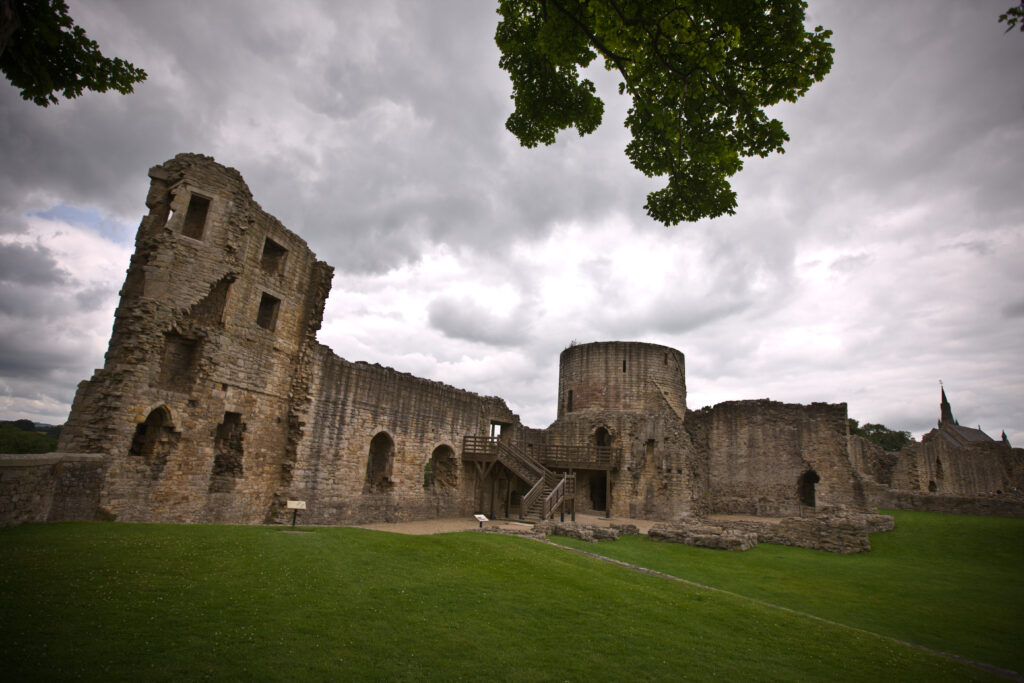
I felt I was prepared for how things would be when I moved to County Durham in the 1990s. Better prepared than many would have been, I still believe. That was really thanks to my wife, and her late father, Bishop David Jenkins, who was Bishop of Durham for 1984 to 1994. He had been in office throughout the miners’ strike and saw close-up the economic and social devastation of those years. At the time, it was hard to see how recovery could take place.
I knew quite a lot of all this at the time, but in getting to know the place and people I found some things worse than I had imagined, and others better. What was worse was the pervasive sense that something else had been lost, and that was hope. It is always dangerous to talk about a general mood, but I do not think my memory faulty in saying that there was at that time a mood of an underlying depression; a sense that anything approaching good times for County Durham were done and dusted; that although this was a place with an extraordinary past, it had become a place where things used to happen. Jobs and industry had gone. Those with ‘get up and go’ had got up and gone too. There wasn’t much to relieve the gloom. A different government had started spending money to bring some relief, but it seemed to be largely spent on projects. There were so many of those; projects where most of the money went on the staff and their offices, with little discernible impact on the people with little to do and less hope.
I got out and about quite widely and saw all this and heard the same kind of stories from all kinds of people; good people with a history of hard work and enterprise, people worried for themselves and their children. I saw places bearing the visible evidence of decline. This was still evident and unavoidable well into the 1990s and beyond.
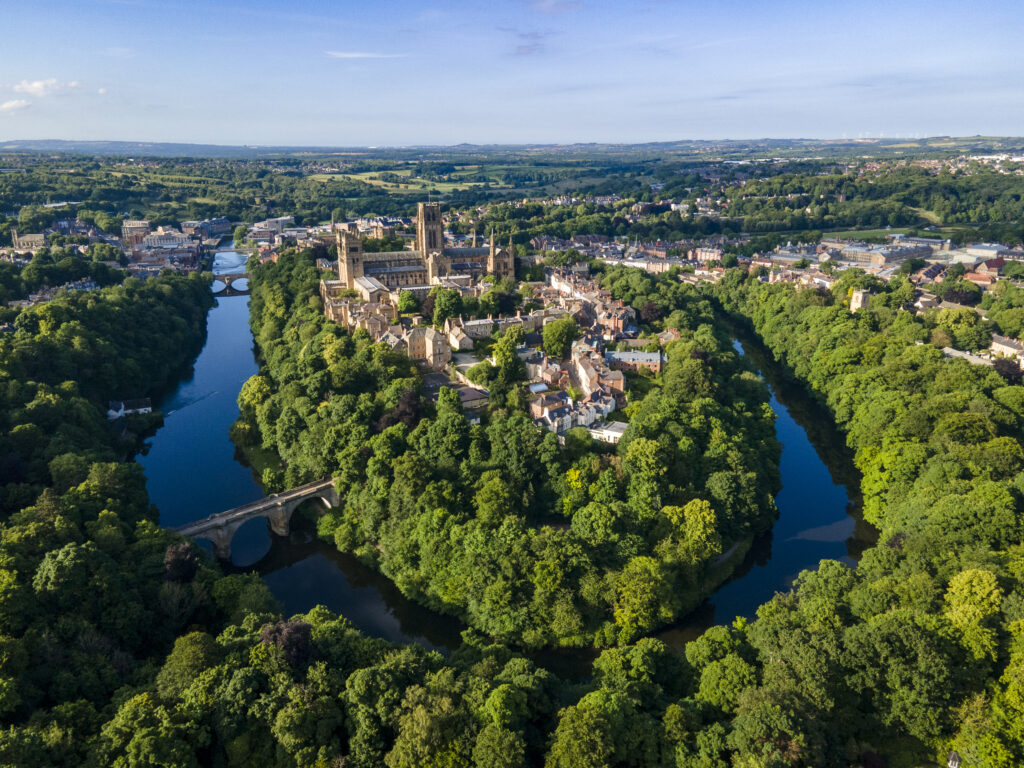
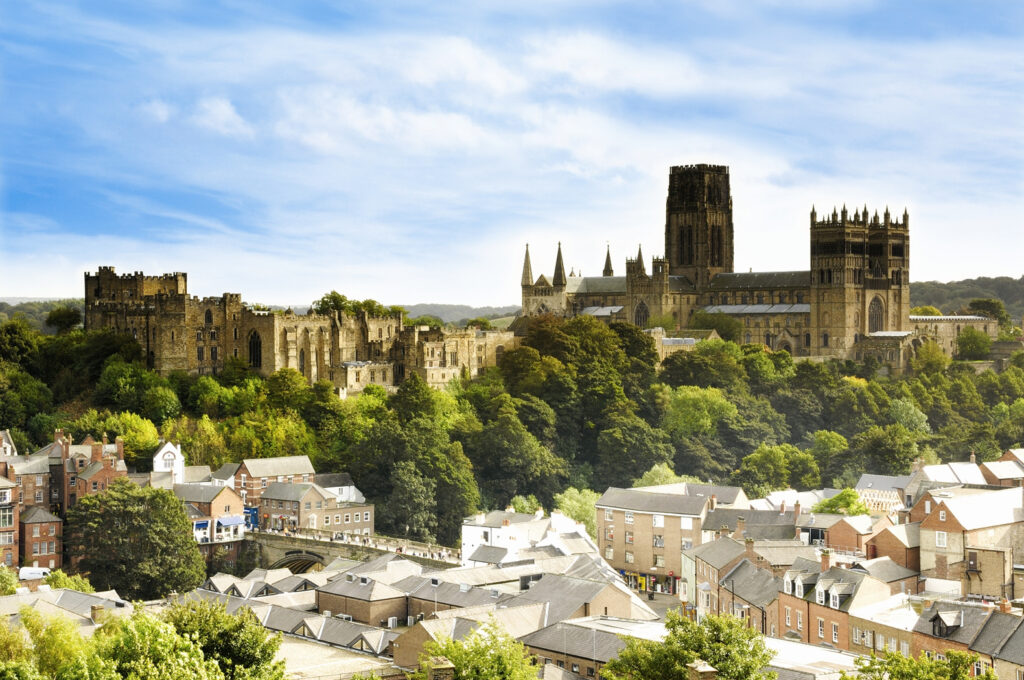
But I saw something else too; an astonishingly beautiful, unspoilt and uncrowded landscape, a rugged and restored coastline, charming towns and largely unspoilt villages, historic churches and castles, and Durham city, whose grandeur and historic importance hardly needs retelling here. I was then, and long remained, struck by the contrast between what I saw and what I heard.
I saw potential too. For example, I saw so many pubs around the County, in lovely old stone buildings, but with interiors sadly, if understandably, lacking in investment and imagination; with sticky carpets and clearly having lacked loving care for decades. Here it was useful to be that ‘incomer’. I could see that if, for example, those pubs or cafes, in very similar lovely buildings, had been in Sussex or Hampshire it would have been a very different story and experience. So why shouldn’t we make that happen here? Why on earth did the rest of the country, indeed the rest of the world, not see what this place was really like and what it had to offer? Why was most of the media coverage and reporting still fixated with loss, failure and poverty? Those things were real enough, but it became obvious to me that they were not the only stories to be told; that there was could be a future as well as a past; that the rear view mirror was not the only optic available.
All of this was in my head when I accepted the offer to join and chair the board of Visit County Durham. It was what made me want to do it. So what did I find?
It starts and continues with the people. I found an existing board of committed, knowledgeable people, serving unpaid, and bringing a very wide range of local and industry experience. Over the fourteen years some went and some came, with the passage of time, but the quality and enthusiasm, and indeed some of the individuals, remained. Making everything work was at first the then Managing Director, Melanie Sensicle, followed after a few years by the current MD Michelle Gorman. That was, and remains, the leadership, and it was, and is brilliant. I am trying hard, very hard, to think of any other organisation or company I have been involved with which has had so little change at the top. More importantly, it has not needed any, because the job that has been done, is being done, is truly exemplary.
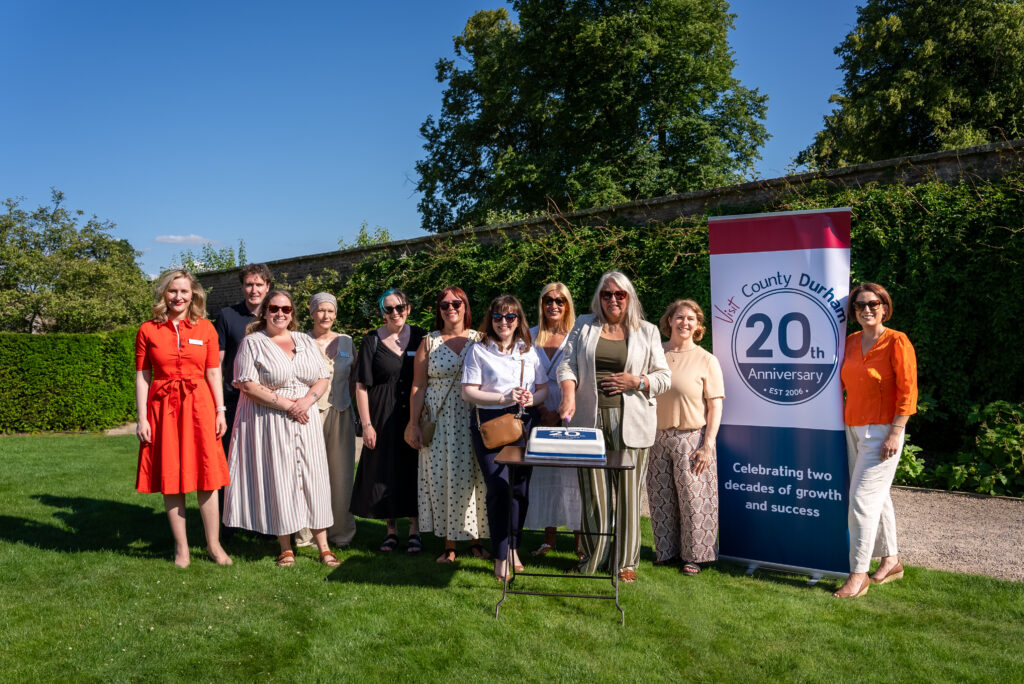
The story of consistency and continuity is perhaps even more striking with the staff team. In an industry in a time of great change, and employing a high proportion of younger staff, one would expect a reasonable high level of turnover. However, not so at VCD, where the turnover has been, frankly, extraordinarily low. Many of the the team members I met when I joined are still there. I think that speaks volumes about the quality and consistency of the management, and shows that something very unusual has been created.
I am convinced that VCD’s success - we will come onto that later - owes much to this level of stability. It means that there has been less distraction from staffing crises and problems, and it has a continuing high level of organisational memory, knowledge and competence. It meant too that there could be a commitment to longer term goals and projects without being blown off course.
That consistency should not lead one to believe that VCD has always existed in a tranquil, rather bucolic environment. You do not need me to remind you of the times we have lived through. When we began social media had hardly a thing, and when I joined the board the whole world was engulfed in the banking crisis, with its dramatic impact on businesses, jobs, livelihoods and on the potential for growth. The world had not fully recovered from that when we had Brexit. We felt that, in our industry, that was battering enough, and then Covid changed everything. We still live with, and have not yet fully grasped the gravity of its economic, social and political consequences. Perhaps this generation never will, and it will be a matter for historians. But we, and our businesses, somehow kept going, and got through.
At the same time, and in order to avert possible boredom for the board and staff, VCD faced additional instability in its ‘place’ both physical and structural. We moved offices more times than it is perhaps reasonable to recall. The team became so good at it that some things were never unpacked from the previous move. The work carried on.
Writing about the changing structural arrangements for public and quasi-public bodies is possibly as relentlessly tedious for the author as it must be for the reader. How can I spare both of us an attack of extreme and possibly life-threatening ennui while doing my duty to some significant points that need to be covered? I shall opt for brevity and risk inadequacy. That way we might both get through it.
In a time now long forgotten, England had ‘Regional Development Agencies’. Some were more successful than others. The one for the North East, called One North East, and thus abbreviated to ONE, was one of the best. It had created VCD as one of four sub-regional bodies to promote tourism. After time, the other three agencies withered and died, but VCD, showing early that talent for survival, kept going. Incidentally, for those who enjoy the frisson of deja-vu, the new regional structure, of the 2020s, with the mayor and local authority representation, looks eerily familiar. Fortunately there are few left who will notice the echo and be made world weary by the repeat performance. Those few may take it as a signal to retire.
When the Regional Development Agencies were closed, ONE was in some ways collateral damage. It was seen to have done a relatively good job, but the closures were national and all were brought down by the failure of some. The government of the day had been embarrassed by the tales of profligacy and almost total ineffectiveness in some regions. It would be wrong to name names, but London, which never needed a Development Agency anyway, comes to mind.
With the closure of ONE, VCD faced an existential crisis. As chair I was deep into the discussions about its future, indeed its survival. To shrink what could be a long chapter into a paragraph, VCD was rescued and adopted by Durham County Council, its staff transferred, and its independent Company and board retained. And so it remains, to this day.
It is hardly the fashion, or something to win ‘likes’ on the ‘socials’ to say nice things about a local authority, but I am going to do so about Durham. From the beginning, and despite a changed world and huge changes in its political complexion, the Council has supported, funded and encouraged VCD as a key part of its economic development strategy. It has been unwavering in this. The money has fluctuated with circumstances but the commitment never has. This continues now. The councillors have of course changed, as have senior officers, but the message, that the visitor economy has huge potential, and increasingly realised potential, to create jobs and transform lives and places has struck home and stuck.
Sometimes, discussing the role of the visitor economy in terms of economic development becomes a dull abstraction; a thing of graphs and powerpoint , with lines drawn to go ever upwards, and handouts available at the coffee break. For me, the reality, and a source of real interest and genuine pleasure was meeting, knowing, and becoming friends with the people in the businesses that gave substance to that ‘ economic development’. Starting and running any kind of hospitality or ‘visitor’ business - and they come in all shapes and sizes - was and remains such hard work, unremittingly so at times. Things are even harder now, with punitive taxation and absurd costs imposed on anyone reckless enough to start employing young people. Yet people still come, start businesses, invest their money, their lives and their dreams, and do whatever they can to make a go of it. Thank heavens for that. VCD has always, to its great credit, always engaged directly with the businesses, at a personal level, not as abstraction, not least with events to bring them together, a partnership scheme and so much more. This does not happen everywhere, and it does not happen by chance.
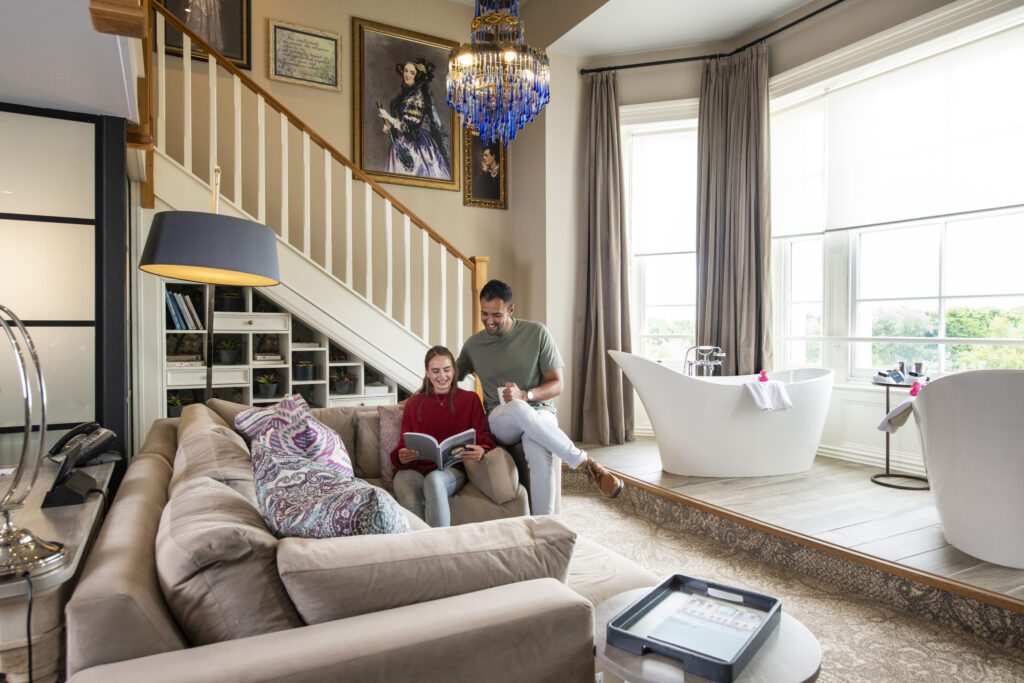
I said at the outset of this reminiscence that I would not bore you into submission with a catalogue of VCD’s successes and innovations. It would be too lengthy and is, I hope, available elsewhere. Nevertheless, it would be wrong to pass on from ‘economic development’ without at least noting that from a standing start, from virtually nothing, and despite all the headwinds that the world has experienced, County Durham now has a visitor economy independently assessed as contributing well over a billion pounds a year and sustaining more than 11,000 jobs. I shall leave the myriad events, campaigns, projects initiatives, advice, support, and creative work that led to this for elsewhere. But this is real, and it matters.
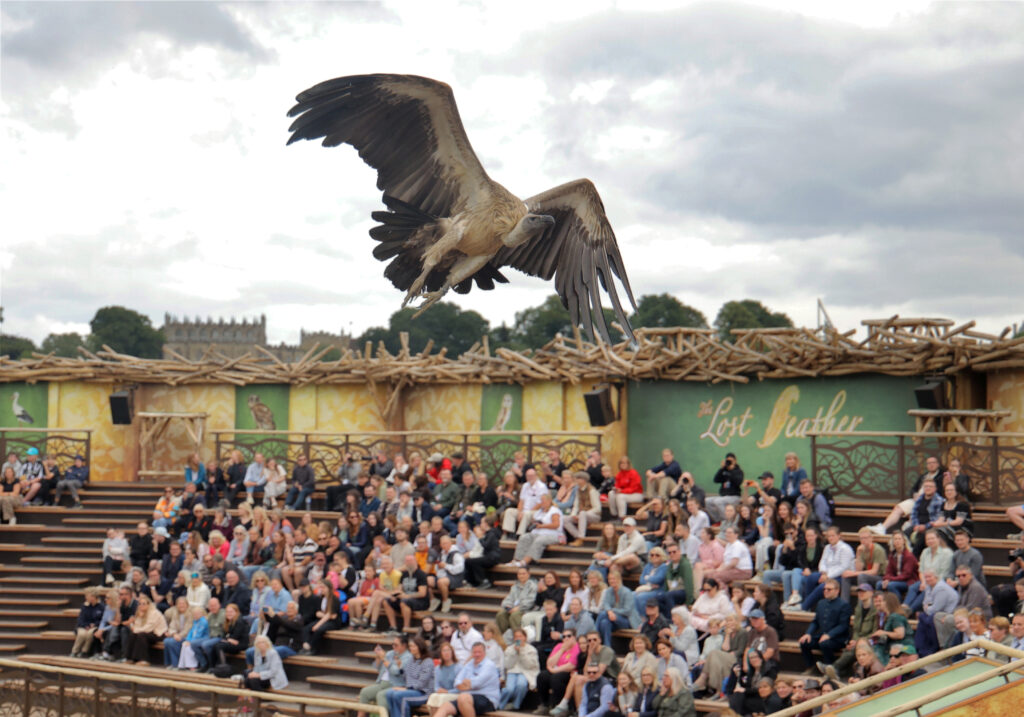
Although all ‘tourism and visitor agencies’ would claim to be about economic development, and I have no doubt that all care about it, and it will be top of their list of objectives every year, some see marketing as the beginning and end of their role. VCD has always concerned itself also with places, and the life of communities, as well as with businesses and their development. It has had both a formal and informal role in what is now rather presumptuously called ‘place making’. Behind this is something we considered a ‘big thing’ - that there had to be a constant focus on what we could offer to the visitor in terms of quality, quantity and experience. The questions were simple; what do we have and how can we make it worth visiting , and visiting well, and staying to experience? At the board and with the team we took the view that marketing was not enough, and indeed it could be counter- productive, self- defeating, if marketing led the customer to disappointment. The tourism industry, throughout the world, often still suffers from the delusions of marketing. It looked so good in the pictures, but it was dire when we got there, and that was before we all became ill…. you know the script. And it is devastating.
And so, in conclusion, that leads us to something that I cannot prove but have come to believe is perhaps the most important thing of all. Building the visitor economy well, as VCD has done and continues to do, not only produces the measurable economic benefits, but by involvement in work that helps improve places and communities it can also change the way the people feel about the place where they live. It can help people understand who they are and how they come to be here. They start to see it not just as it is and was, but how it might become; to see its strengths as well as it problems; to notice what was there already and possibly just taken for granted. Discovering that where you live is a place that matters, that it has a history and a story to tell, can unlock depth and pride. The greatest benefit may be in that change in the perception and self-belief of those who already live there, rather than just in the visitors. It may be that people can come to see things almost as if through the eyes of a supportive ‘incomer’. Which takes me back to where we began.
My years at VCD taught me much and it was a joy to work with such remarkable and dedicated people, doing something in which we all really believed. I thank them all, and reader, I miss it.
Ivor Stolliday
June 2026